


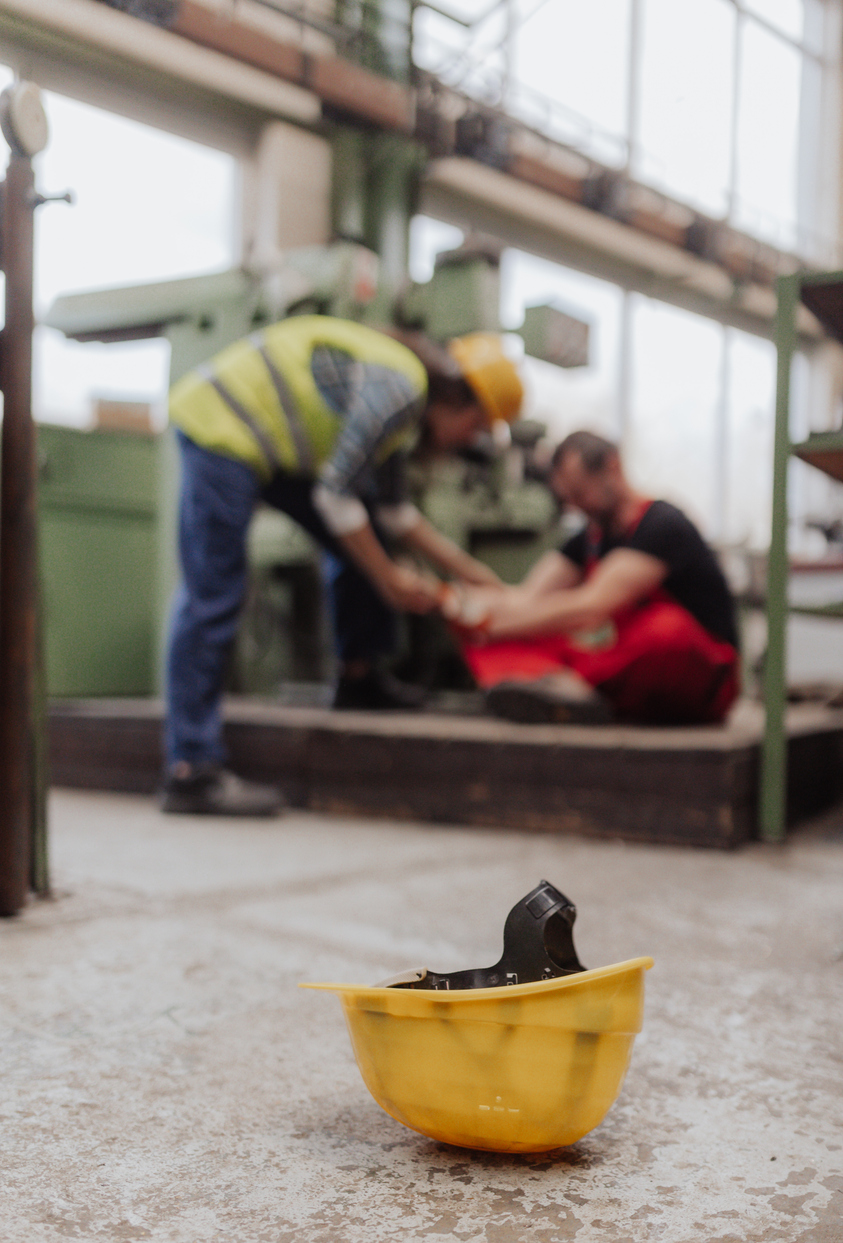








If you were injured by a defective product in Nevada, the most important thing to understand about your legal rights is this: you do not have to prove the manufacturer was careless. You do not have to show they cut corners, ignored warnings, or acted in bad faith — though all of those things may be true and provable. Under Nevada law, strict product liability means that if the product was defective and the defect caused your injury, the manufacturer is responsible. Full stop.
Nevada follows strict product liability
Nevada adopted the strict product liability standard from the landmark California case Greenman v. Yuba Power Products (1963) and the Restatement (Second) of Torts § 402A. The Nevada Supreme Court has consistently applied this standard: a manufacturer or seller who places a defective product into the stream of commerce is liable for injuries caused by that defect, regardless of whether the manufacturer exercised reasonable care in producing it.
This distinguishes strict liability from negligence. In a negligence case, the plaintiff must prove the defendant failed to act with reasonable care. In a strict liability case, the plaintiff does not need to prove anything about the defendant’s conduct. The product’s condition — defective when it left the manufacturer — is what creates liability.

What you must prove in a Nevada product liability case
Under Nevada strict liability, a plaintiff must establish three elements:
- The product was defective. The product had a manufacturing defect, a design defect, or a failure to provide adequate warnings. See our Types of Product Defects in Nevada guide for a full breakdown of each category.
- The defect existed when the product left the manufacturer’s control. The defect must have been present at the time of sale, not introduced later by a third party or through abnormal use.
- The defect caused your injury. The defect must be the legal and factual cause of the harm you suffered. A product can be defective without causing an injury — the causation link must be established.
Notice what is not on that list: the manufacturer’s intent, their knowledge of the defect, their compliance with industry standards, or whether they acted reasonably. None of those things are elements of strict liability in Nevada.

Reasonable use requirement
Strict liability applies when the injured person was using the product in a reasonably foreseeable way. A manufacturer is not liable under strict liability for injuries caused by unforeseeable misuse. But “foreseeable use” is broader than “intended use.” Manufacturers are required to anticipate and design for uses that reasonable people predictably make, even if those uses are not the primary purpose of the product.
In off-road vehicle cases, manufacturers cannot escape liability by arguing the rider was on difficult terrain. Challenging terrain is the foreseeable environment for an off-road vehicle. The vehicle is supposed to be designed for it.
Free Consultation We’ll help you win the benefits you need to get your life back.
Who can be held liable under Nevada strict liability
Nevada’s strict liability doctrine covers the entire supply chain. Any entity that placed the defective product into the stream of commerce may be liable, including:
- Manufacturers — the company that designed and built the product
- Component part manufacturers — companies that made a defective part incorporated into the final product
- Distributors — entities that moved the product from manufacturer to retailer
- Retailers — businesses that sold the product directly to the consumer
This multi-defendant structure matters strategically. When a defective component causes an injury, both the component manufacturer and the vehicle manufacturer may be liable. Nevada’s comparative fault rules allow liability to be apportioned among multiple defendants based on their respective roles.
Strict liability versus negligence in Nevada
Many product liability cases can be pursued under both strict liability and negligence theories. The strategic difference: strict liability requires no proof of the manufacturer’s conduct — only that the product was defective, the defect caused the injury, and the plaintiff used the product reasonably. Negligence requires proof that the manufacturer failed to exercise reasonable care. Negligence is harder to prove but can open the door to evidence about internal knowledge, concealment, and corporate decision-making.
In many significant product liability cases, the negligence claim is what gets the most damaging documents into evidence — the internal emails that show what the manufacturer knew, the test data that showed a safety problem, and the risk analysis that decided to keep selling the product anyway.
Punitive damages in Nevada product liability cases
Nevada allows punitive damages in product liability cases when the plaintiff can prove by clear and convincing evidence that the defendant acted with oppression, fraud, or malice. In the product liability context, this typically means showing that the manufacturer knew about a dangerous defect and continued to sell the product without disclosure or correction — the concealment pattern that led to Polaris’s $27.25 million CPSC penalty in 2018.
Under NRS 42.005, punitive damages in most Nevada cases are capped at three times the compensatory damages, or $300,000, whichever is greater. However, the cap does not apply to certain cases involving intentional misconduct or products liability claims involving deliberate concealment of known defects.
Nevada’s comparative fault rules and product liability
Nevada follows a modified comparative fault system under NRS 41.141. If the plaintiff is found to be partially at fault for their own injury, their damages are reduced by their percentage of fault. Critically, a plaintiff who is found to be more than 50 percent at fault cannot recover at all.
In product liability cases, defendants frequently argue the plaintiff misused the product or assumed the risk. The risk assumption defense is evaluated based on whether the plaintiff actually knew about the specific defect that caused the injury — not whether they knew the activity carried some general risk.
What damages may be available in a Nevada product liability case
- Past and future medical expenses
- Lost wages and lost earning capacity
- Pain and suffering
- Emotional distress
- Disfigurement and disability
- Loss of consortium for spouses and family members
- Punitive damages, when the manufacturer’s conduct meets the legal standard
For a full discussion of damages available in specific product categories, see our service pages for Polaris UTV accidents, Can-Am UTV accidents, Yamaha UTV accidents, and Honda ATV accidents.
The time limit for filing a product liability claim in Nevada
Nevada law imposes a two-year statute of limitations on personal injury claims, including product liability cases. The clock generally starts on the date of injury. In some cases, the discovery rule allows the clock to start when the plaintiff knew or reasonably should have known about the defect and its connection to the injury. See our Nevada Product Liability Statute of Limitations guide for a complete breakdown.
Talk to a Nevada product liability lawyer
Shook & Stone has spent more than two decades representing injured Nevadans against manufacturers, distributors, and retailers whose defective products caused harm. Our clients have collectively recovered more than $500 million. Your initial consultation is free, and we work on contingency — you pay nothing unless we win.
For a full overview of how Shook & Stone approaches product liability cases, see our Las Vegas Defective Product Lawyer page.
Frequently asked questions
Does Nevada strict liability cover products sold online?
Yes. If you purchased a product online and were injured by it in Nevada, Nevada’s strict liability law applies. What matters is where the injury occurred and whether the product was placed into commerce in a way that made it foreseeable it would be used in Nevada.
What if the product was recalled after I was injured?
A recall issued after your injury is actually strong evidence in your favor — it documents that the defect existed and that the manufacturer eventually acknowledged it. The recall does not eliminate the manufacturer’s liability for injuries that occurred before the recall. See our Suing After a Product Recall in Nevada guide.
What if the product met all applicable government safety standards?
Compliance with government safety standards does not automatically defeat a strict liability claim in Nevada. Courts have held that regulatory standards set a floor, not a ceiling. A product can comply with federal standards and still be defective under Nevada’s strict liability test.
Can I still sue if I signed a liability waiver?
Waivers are enforceable in some Nevada contexts but not all. A waiver that purports to excuse a manufacturer from strict liability for a latent product defect — one the consumer had no way of knowing about when they signed — is unlikely to be enforced as written.
What is the difference between product liability and warranty claims?
Strict liability requires no contract — it applies regardless of whether the injured person bought the product directly from the defendant. Warranty claims are contract-based and require privity or an express or implied warranty that extends to the plaintiff. In most major product defect cases, strict liability is the stronger theory.



 DIRECTIONS